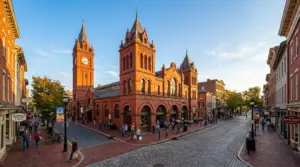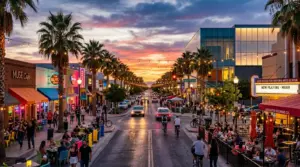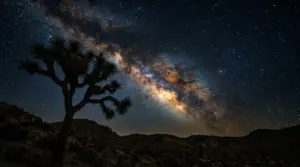
Living in or visiting the high desert comes with an undeniable perk that city dwellers rarely get to experience: unhindered access to the cosmos. Just minutes outside the glowing streetlights of urban Lancaster, the vast, open expanse of the Western Mojave Desert opens into a sanctuary for astronomers, night-sky photographers, and casual stargazers alike.
Thanks to low humidity, high elevation, and expansive desert topography, the Antelope Valley serves as a gateway to brilliant night skies. Whether you are aiming to track major annual meteor showers, capture the glowing dust lanes of the Milky Way, or simply sit under a canopy of stars on a quiet evening, here are the premier dark-sky spots near Lancaster, CA.
Why the High Desert is an Astrophotography Haven
Stargazing quality is heavily influenced by three factors: light pollution, elevation, and atmospheric moisture. While the Greater Los Angeles basin suffers from intense light glow, the Tehachapi Mountains and San Gabriel Range act as physical barriers, shielding parts of the high desert from light pollution.
Combined with Lancaster’s elevation sitting at over 2,350 feet above sea level, the thinner atmosphere allows celestial light to pass through with remarkable clarity. By traveling just 15 to 30 minutes east or north of town, you enter Class 3 and Class 4 zones on the Bortle Dark-Sky Scale, where the Milky Way becomes easily visible to the naked eye.
Top Stargazing Locations Around Lancaster
1. Saddleback Butte State Park
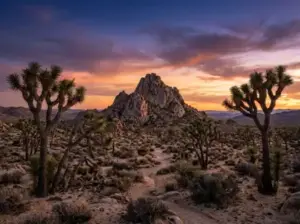
Located roughly 20 miles east of downtown Lancaster, Saddleback Butte State Park is widely considered the crown jewel for local night-sky enthusiasts. Situated far beyond the city’s suburban footprint, this 3,000-acre park protects a classic high-desert ecosystem surrounded by Joshua tree woodlands.
The park features a designated day-use area and a 50-site campground that provides an ideal staging ground for night observation. Setting up your telescope near the base of the 3,651-foot granite peak shields ambient glare from the west, revealing stunning views of constellations to the east and north.
Distance from Lancaster: ~25 minutes east via E Avenue J
Best For: Deep-sky observing, planetary viewing, and desert camping
Insider Tip: Arrive before dusk to secure parking and allow your eyes 30 minutes to adjust to complete darkness.
2. Prime Desert Woodland Preserve (For Evening Astronomy Programs)
If you prefer to stay close to town or want an educational night out with family, the Prime Desert Woodland Preserve offers an accessible window into the night sky. While light pollution from central Lancaster prevents ultra-deep sky astrophotography, the preserve’s protected 290 acres offer dark trails buffered by desert flora.
In partnership with the Antelope Valley Astronomy Club, the preserve periodically hosts public star parties. Club members set up high-powered motorized telescopes, giving visitors up-close views of the rings of Saturn, the craters of the Moon, and bright binary star systems.
Distance from Lancaster: Located in West Lancaster (K-8 & 35th St W)
Best For: Beginners, families, and guided astronomy lectures
Insider Tip: Check the city events calendar for official AV Astronomy Club public viewing nights.
3. Apollo Community Regional Park
Situated in North Lancaster, Apollo Park offers wide-open northern horizons over its three expansive lakes. Because the park faces north toward low-density rural stretches, it serves as a great local spot for observing events in the northern sky, such as meteor showers radiating from circumpolar constellations.
The flat paved walking loops allow you to safely walk to the water’s edge at night. The calm lake surfaces often reflect brighter planets like Jupiter and Venus, creating memorable photo opportunities for low-light camera setups.
Distance from Lancaster: ~10 minutes north via Fox Field / 50th St W
Best For: Northern horizon observation and meteor watching
Insider Tip: Bring a lawn chair and set up near the western lake shore away from park entrance lighting.
4. Red Rock Canyon State Park (Day-Trip Distance)
For those willing to drive roughly 45 minutes north along Highway 14, Red Rock Canyon State Park offers truly dramatic dark-sky conditions. Surrounded by towering rustic sandstone cliffs, the park offers a true backcountry feel where dark sky conditions allow the galactic core to shine brilliantly from spring through early autumn.
The dramatic rock formations serve as foreground elements for astrophotographers looking to shoot long-exposure star trails or Milky Way panoramas.
Distance from Lancaster: ~45 minutes north via CA-14 N
Best For: Milky Way astrophotography and dramatic landscape framing
Insider Tip: The Ricardo Campground offers great walk-in stargazing access directly from campsites.
When to Go: Annual Celestial Events in the Mojave
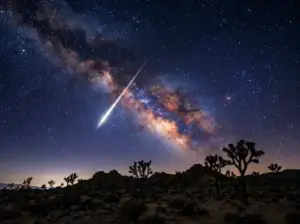 While any clear, moonless night yields impressive views, planning your stargazing outing around major astronomical events elevates the experience.
- Milky Way Season (April – October): The bright galactic core is visible in the southern sky during late spring, summer, and early fall. Plan outings during the New Moon phase for maximum contrast.
- Perseid Meteor Shower (Peak: August 11–13): One of the year’s most reliable displays, producing up to 60 to 100 shooting stars per hour under dark desert skies.
- Geminid Meteor Shower (Peak: December 13–14): Known for slow, bright green-tinted fireballs that stand out vividly against crisp winter desert air.
Essential Stargazing Etiquette & Safety Tips
Navigating the high desert at night requires preparation to ensure safety and preserve the experience for fellow night-sky observers:
- Use Red Light Flashlights: White light destroys human night vision, taking up to 20–30 minutes for your eyes to readjust. Red LEDs preserve dark adaptation while letting you safely walk around.
- Dress in Layers: Desert temperatures drop rapidly after sunset. Even during summer months, evening winds off the Tehachapi Mountains can be chilly.
- Watch for Wildlife: Desert creatures—including rattlesnakes in summer months and nocturnal jackrabbits—are active at night. Stick to established trails and use a ground light while walking.
- Pack Extra Water & Fuel: Cell service can be spotty in remote desert locations like Saddleback Butte and Red Rock Canyon. Ensure your vehicle has plenty of fuel before heading out.
Pair Your Night Out with Local Dining
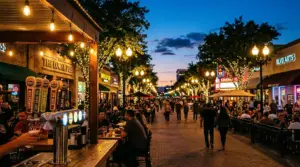
Planning a late night under the stars? Fuel up before you head out into the desert. Grab a warm espresso, a craft brew, or a hearty dinner on your way out of town.
Explore our Ultimate BLVD Dining Guide to find top-rated local cafes and restaurants along W Lancaster Blvd before heading east toward the dark skies.