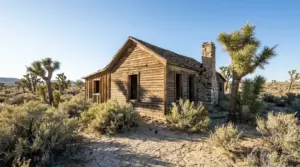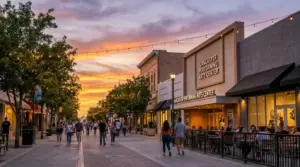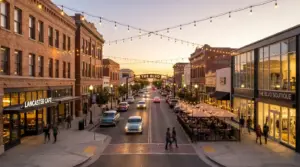
Drive east out of central Lancaster today, past the bustling corridors of The BLVD and the aerospace facilities that define the modern high desert, and the landscape quickly opens into vast stretches of creosote scrub, alkali flats, and solitary Joshua trees. Scattered across this arid expanse lie quiet reminders of an era long before supersonic flight or suburban tracts: crumbling stone foundations, sun-bleached timber, and rusted windmill frames. These remnants belong to the early Antelope Valley homesteaders—a determined wave of pioneers who arrived in the late nineteenth century, convinced they could coax thriving farms out of the western Mojave Desert.
The Arrival of the Railroad and the Promise of Cheap Land
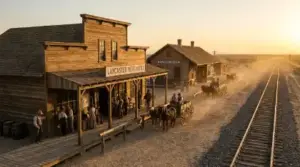
For centuries before European-American settlement, the western Mojave was stewarded by Indigenous peoples, including the Kitanemuk, Serrano, and Tataviam, who understood the seasonal rhythms of the valley’s springs and vernal pools. That balance shifted dramatically in 1876 when the Southern Pacific Railroad completed its line through Soledad Canyon, linking San Francisco and Los Angeles. Suddenly, a remote desert basin once crossed only by stagecoaches and freight wagons was connected directly to major California markets.
To encourage settlement along these newly accessible corridors, Congress passed the Homestead Act and subsequent federal land statutes, including the Desert Land Act of 1877. Under the Desert Land Act, settlers could claim up to 640 acres of arid public land for $1.25 per acre, provided they irrigated and reclaimed a portion of the acreage within three years. For families priced out of coastal California or arriving from the Midwest via rail, the promise of an entire square mile of property seemed like an unmatched opportunity.
Life on a High-Desert Claim
By the 1880s, land speculators and railway promoters were marketing the Antelope Valley as an untapped agricultural paradise. Pamphlets boasted of rich alluvial soil, mild winters, and endless sunshine—conveniently omitting the region’s punishing summer heat, relentless spring winds, and average annual rainfall of less than eight inches.
When early Antelope Valley homesteaders stepped off the train at the fledgling Lancaster depot, reality set in quickly. Building a homestead required ingenuity and constant physical labor:
- Shelter from the Elements: With timber scarce on the valley floor, pioneers hauled lumber by wagon from the San Gabriel Mountains or constructed thick-walled adobe and stone dwellings designed to insulate against 105-degree summers and freezing winter nights.
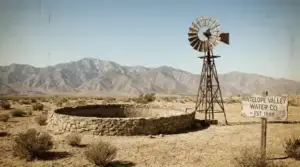
- The Battle for Water: Before deep-well turbine pumps existed, settlers dug hand-excavated wells or relied on artesian springs near the valley’s lower basins. Wooden windmills became vital lifelines, creaking day and night to draw groundwater into earthen holding tanks.
- Clearing the Scrub: Preparing fields meant uprooting dense stands of sagebrush, mesquite, and Joshua trees using horse-drawn plows and hand axes—a grueling process that often yielded only a few cleared acres per season.
Dry Farming, Orchards, and the Boom-and-Bust Cycle
Because surface water was scarce, many settlers turned to “dry farming”—a technique relying on deep plowing and soil mulching to trap whatever winter moisture soaked into the ground. During years of above-average rainfall in the late 1880s, the strategy appeared miraculous. Fields of wheat, barley, and alfalfa turned green across Lancaster, Palmdale, and neighboring settlements like Fairmont and Del Sur.
Encouraged by early harvests, homesteaders planted thousands of fruit and nut trees, particularly almonds, pears, and apples. For a brief window, Antelope Valley orchards gained statewide acclaim, winning prizes at agricultural fairs and attracting even more families to stake claims along the valley floor.
However, the desert’s climate soon tested the limits of optimistic farming. A severe, multi-year drought struck Southern California in the mid-1890s. Shallow wells ran dry, crops withered in the fields, and grazing cattle perished. Without reliable irrigation infrastructure, hundreds of homesteaders were forced to abandon their claims, leaving behind empty cabins and dying orchards as they retreated toward Los Angeles or the San Joaquin Valley.
Communities Forged in Isolation
Those who weathered the drought years built tightly knit rural communities anchored by one-room schoolhouses, general stores, and local post offices. Settlements such as Manzana, Llano, and Esperanza served as vital social hubs where isolated families gathered for weekend dances, church services, and supply runs.
In Lancaster itself, the town center grew steadily around the railroad tracks, transitioning from a simple water stop into a commercial hub for hay shipping, borax freighting from Death Valley, and local livestock trade. The grit required to survive the 1890s drought fostered a distinct high-desert identity—one rooted in self-reliance, neighborly cooperation, and adaptability.
Preserving the Tangible Legacy of Lancaster’s Pioneers
By the early twentieth century, gasoline-powered water pumps and the expansion of groundwater irrigation revived agriculture in the Antelope Valley, ushering in decades of alfalfa and pear production before aviation and aerospace transformed the region after World War II. Yet the blueprint of modern Lancaster—its grid of mile-square section roads, its rural outskirts, and its resilient civic spirit—remains directly tied to those nineteenth-century land claims.
Today, visitors and residents can still experience pieces of this era firsthand. The Antelope Valley Indian Museum State Historic Park preserves both the Indigenous heritage of the region and the eccentric early-twentieth-century homestead architecture of H. Arden Edwards. Meanwhile, the Western Hotel Museum in downtown Lancaster stands as the city’s oldest surviving structure, offering a direct window into the frontier railroad days when homesteaders first arrived in search of a new life.
The next time you travel along the quiet rural roads outside Lancaster at dusk, take a closer look at the weathered fence posts and stone ruins resting beneath the Joshua trees. Those silent structures are more than relics of a bygone era—they are the enduring echoes of the families who first called the high desert home.